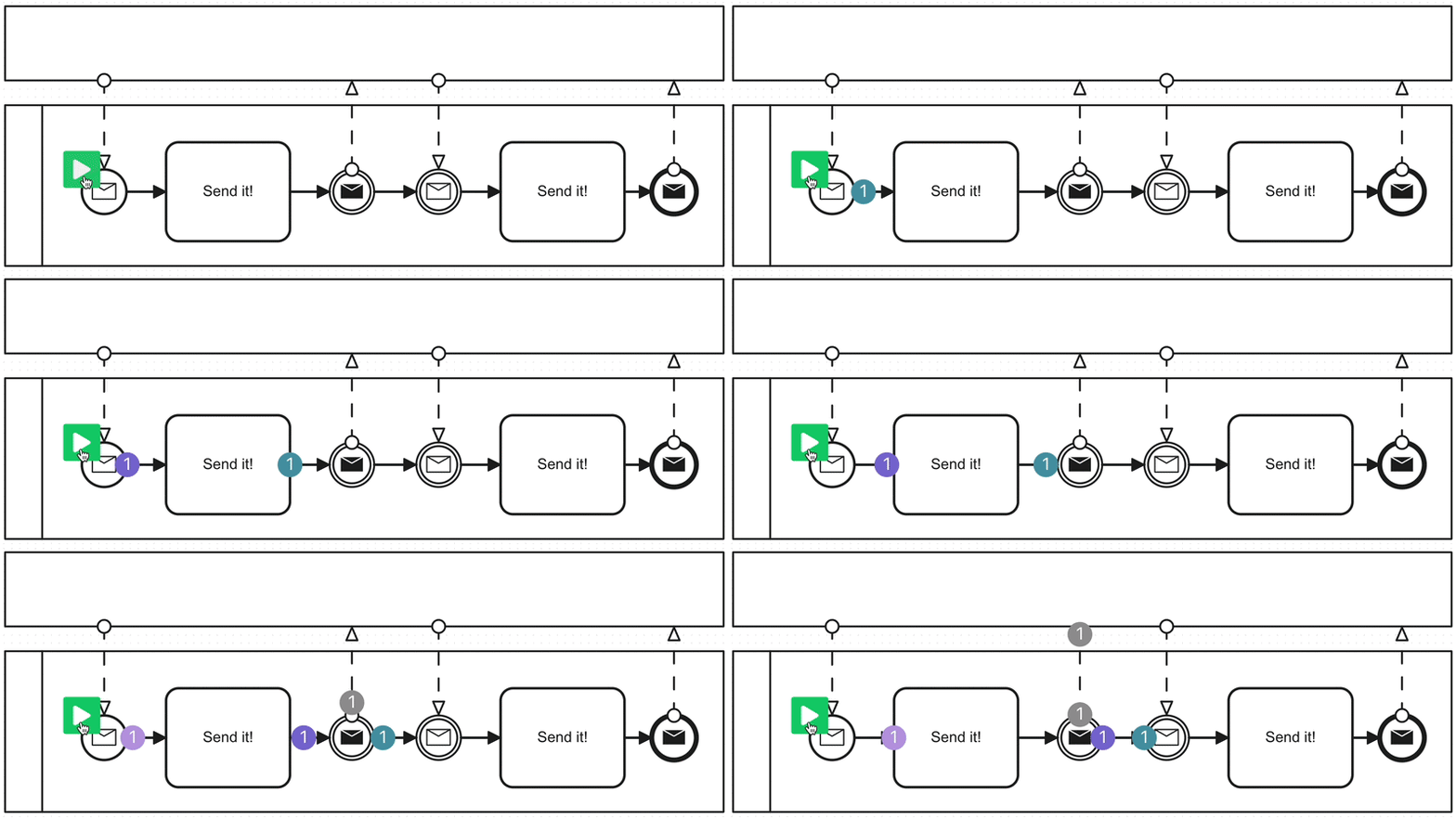
Misusing BPMN message events for internal communication is one of the most common process modeling mistakes. It clutters the workflow diagram and breaks with BPMN's core design principle: message events are for communication between pools, not within them.
The Common Confusion: Can I Use Message Events Within a Pool?
The short answer: no. Message events are strictly for communication between different participants (different pools), not for coordination within a single pool.
This separation is central to BPMN diagrams. A participant (shown as a pool) represents an independent entity — like a company, vendor, or external system. Communication across pools uses formal messages to mirror the real world: contracts, APIs, service calls, or emails.
Inside a single participant, activities are under common control. Coordination here is direct — no need for formal messages. That's why BPMN reserves message events for cross-pool interactions only.
Why BPMN Enforces This Separation
By keeping a clean boundary between internal and external interactions, BPMN ensures that:
- Workflow diagrams stay clean and readable
- BPMN diagrams reflect true boundaries of responsibility (internal vs. external)
- Process modeling supports automation more easily, since external communication often maps to technical interfaces (APIs, queues, services)
This isn't just best practice — it's defined by the Object Management Group (OMG), the standards body behind BPMN.
Concept Cheat Sheet
| Concept | Meaning |
|---|---|
| Pools | Independent participants (different organizations or external systems) |
| Messages | Collaboration between independent participants |
| Inside a pool | Internal coordination — use sequence flows and lanes, not messages |
How to Model Internal Communication Correctly
For communication within a pool (inside the same participant):
- Sequence flows – show the order of tasks and coordination between roles.
- Data objects – illustrate the hand-off of information or documents.
- Signal events (advanced) – model broadcast-style communication within a participant or across participants.
Golden rule:
- Within the same participant → No message events
- Between independent participants → Use message events
Why Getting This Right Matters
Using message events only between pools helps you:
- Build cleaner, BPMN-compliant models
- Keep diagrams compact and readable
- Define clear ownership boundaries
- Create a solid foundation for automation
If every hand-off inside one participant were shown as a message event, diagrams would turn into dense webs of message flow lines. Sticking to sequence flows for internal coordination keeps diagrams readable while still capturing essential external interactions.
Try it in Crismo
Model a simple process twice in crismo.io:
- Roles communicating inside a single pool (with sequence flows)
- Communication between two pools (with message events)
You'll see instantly how much cleaner and truer to BPMN your workflow diagrams become when you apply this rule.
Try Crismo
Model your process. Find opportunities to improve it.
Map your process in BPMN 2.0, understand how it works, and uncover opportunities to optimise it.