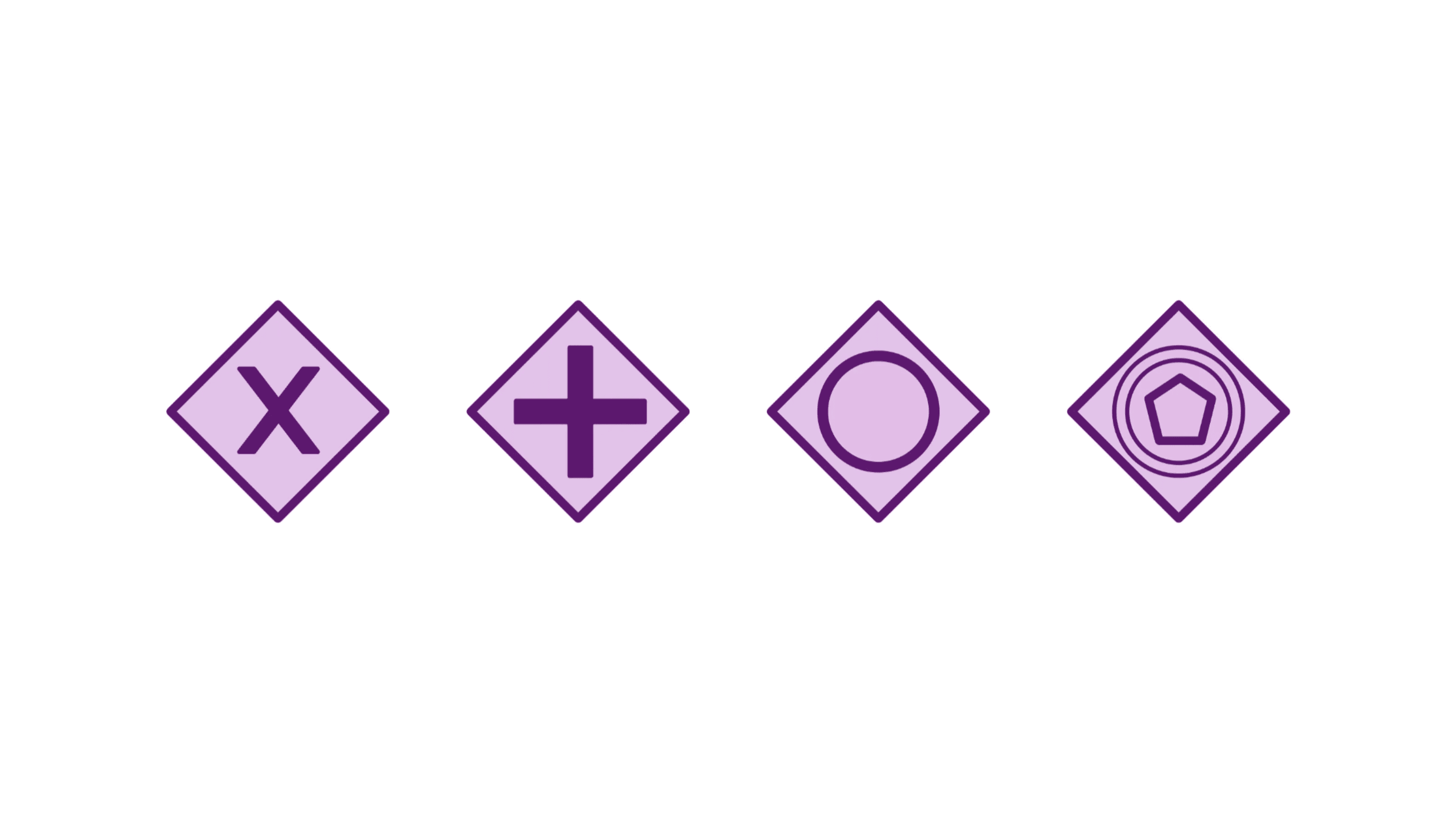
Exclusive? Parallel? Inclusive? Event-based? Gateways decide how your process branches and rejoins. This quick read shows when to use each type in a BPMN diagram, gives small real-world examples, and highlights the pitfalls that trip up even seasoned modelers in process modeling.
Exclusive Gateway (XOR)
An exclusive gateway allows exactly one outgoing path. In a workflow diagram, this is the point where only a single answer can be valid — yes or no, approve or reject.
Example:
A travel-request process checks the requested amount. If the cost is €1,000 or less, the system auto-approves. If it's higher, the request routes to a manager. Because only one outcome should ever fire, the exclusive gateway is the perfect fit for this BPMN diagram.

Common pitfall:
Forgetting to add explicit conditions on each outgoing flow. Without them, the process may stall, because there are no criteria for choosing a branch.
Parallel Gateway (AND)
A parallel gateway splits — or later joins — the flow into all paths simultaneously. Use it when several tasks must happen in parallel or when every branch must finish before the next step begins.
Example:
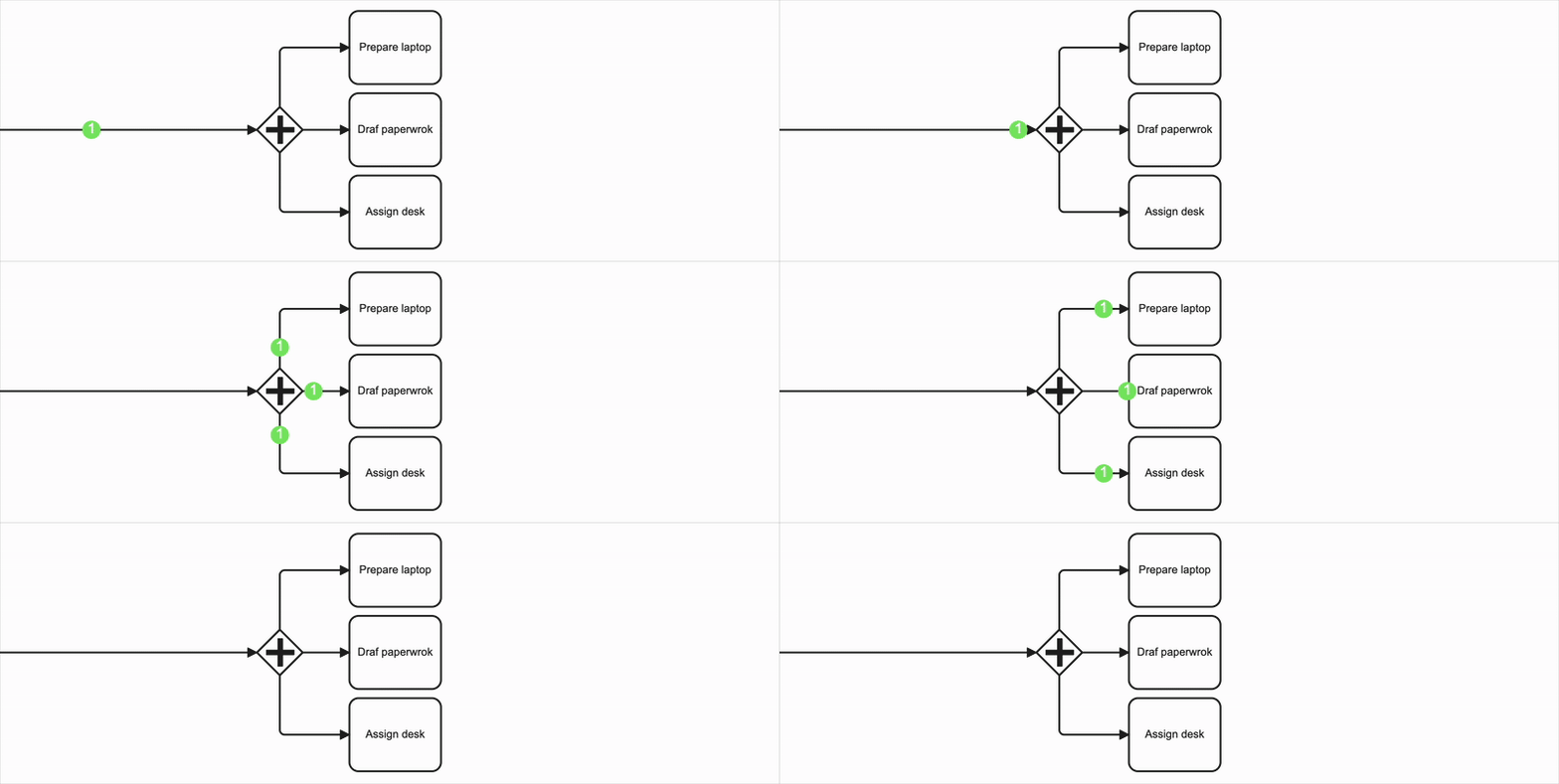
Onboarding a new employee often triggers three parallel streams:
- IT prepares a laptop
- HR drafts paperwork
- Facilities assigns a desk
All three tasks run independently, then converge before the welcome email is sent in the workflow diagram.
Common pitfall:
Adding conditions. Parallel gateways are unconditional; if you need criteria on each branch, you chose the wrong gateway.
Inclusive Gateway (OR)
An inclusive gateway activates one or more outgoing paths, depending on which conditions hold true. It shines in BPMN diagrams where several rules may apply concurrently.
Example:
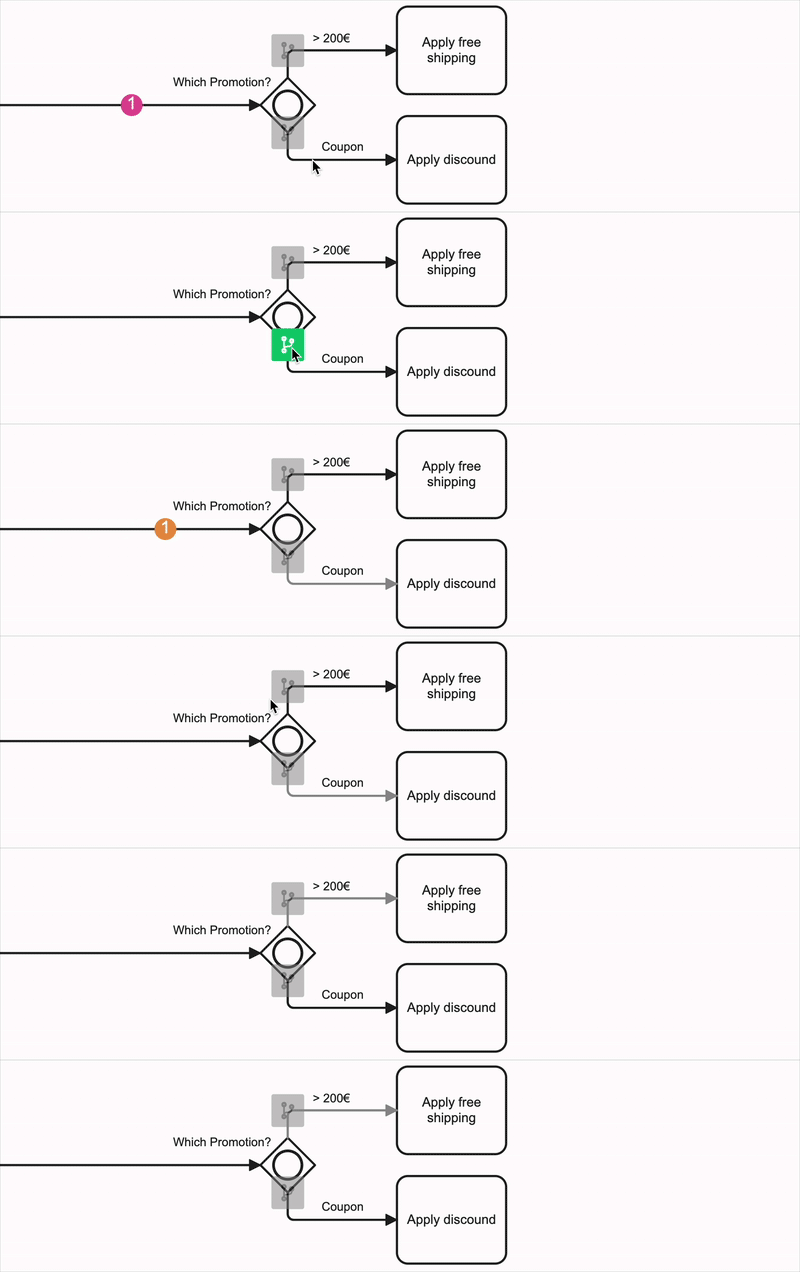
During order processing, an online store evaluates promotions:
- If the total is more than €200, the customer gets free shipping.
- If they also possess a valid coupon, a discount applies.
Either rule can fire independently, or both can trigger together. The inclusive gateway handles this flexibility, then waits for every activated branch before merging.
Common pitfall:
Forgetting to add explicit conditions on each outgoing flow, as with the Exclusive Gateway.
Event-Based Gateway
Unlike condition-driven gateways, an event-based gateway waits for whichever external event occurs first, then follows that path. The next step in the BPMN diagram after the gateway must be a message, timer, signal, or condition-catching event.
Example:
After sending a follow-up email, a support workflow pauses.
- If the customer replies, the ticket closes.
- If 48 hours pass with no response, a reminder email goes out.
The gateway listens for both events but commits to the first one that arrives.

Common pitfall:
Placing tasks or throwing events directly after the gateway. Only catching message, timer, signal, or condition events are allowed as immediate successors.
Choosing the Right Gateway — A Quick Memory Hook
- Exclusive → one path: think "choose"
- Parallel → every path: think "do simultaneously"
- Inclusive → one or many paths: think "pick any that apply"
- Event-based → first event: think "wait and react"
Wrapping Up
In process modeling, choosing the right gateway is less about diagram aesthetics and more about keeping your process healthy.
- Exclusive handles one-way choices
- Parallel fires everything at once
- Inclusive covers any mix of conditions or choices
- Event-based waits for the first trigger
Keep those four ideas straight, and you'll prevent most of the race conditions, bottlenecks, and dead ends that haunt workflows. Next time you sketch a workflow diagram, pause for a beat, double-check the gateway, and move on knowing your BPMN diagram can stand up in the real world.
👉 Try modeling gateways yourself in the free Crismo playground — no signup required.
Happy modeling — and see you in the next post!
Try it yourself
Model your first gateway in Crismo
Real BPMN, fast to model, organised into value streams. No signup needed to start.