The Crismo Blog
Process thinking, BPMN & the AI shift
Practical guides on modeling, governance, and designing processes for a world where AI does the work.
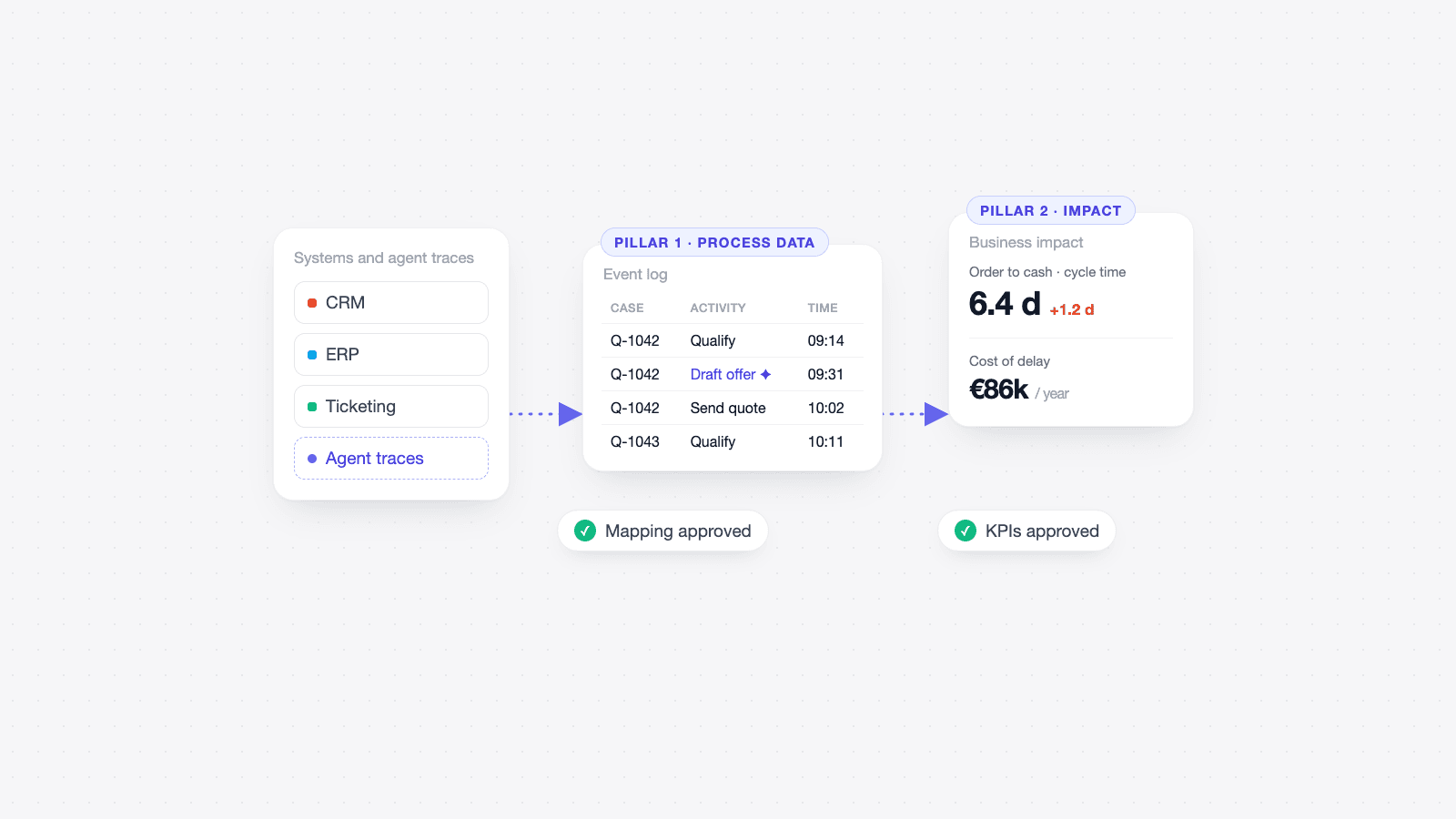
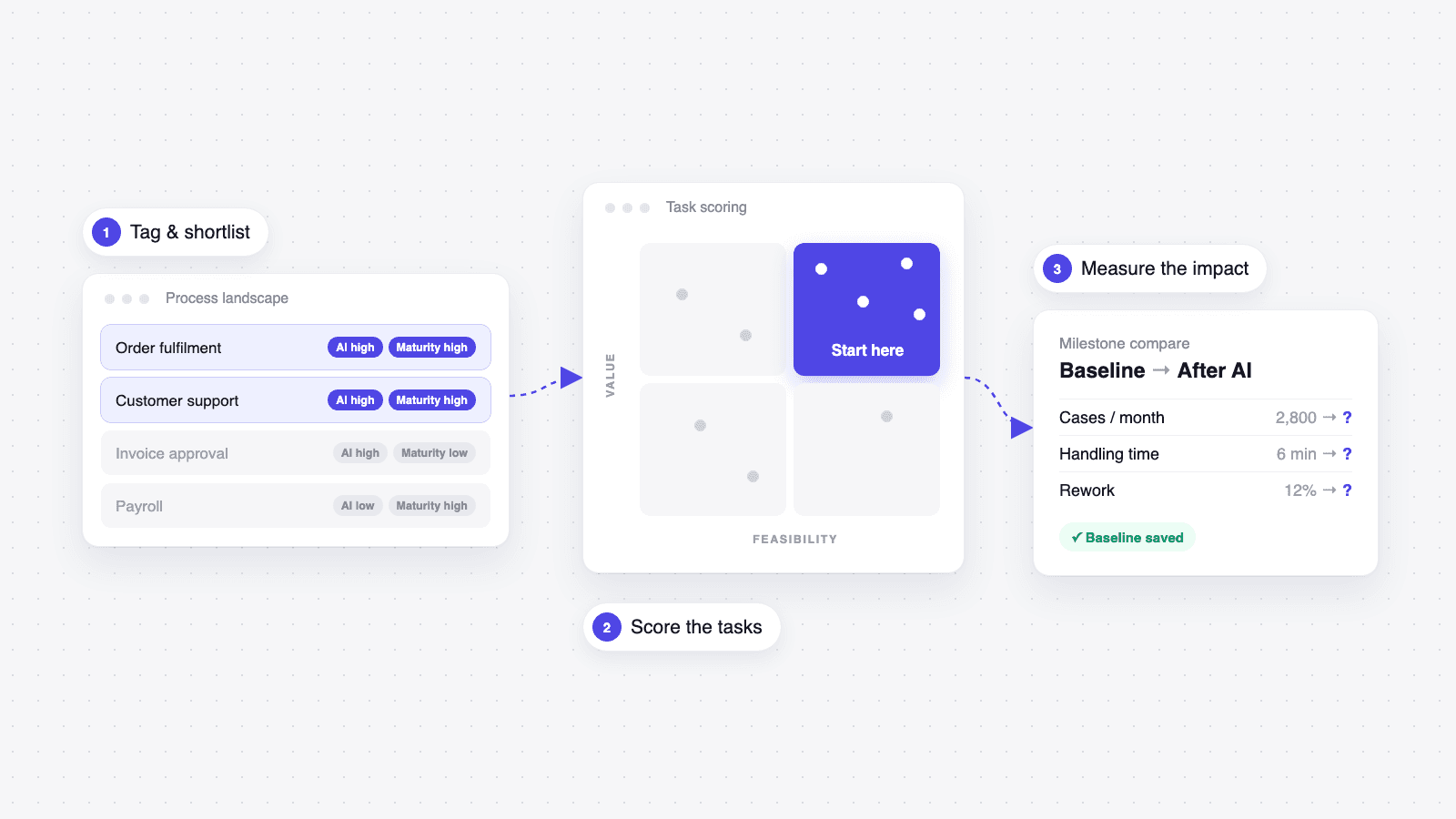
From Process Landscape to AI Opportunities: Three Practical Steps
Three practical steps to identify, prioritise and measure AI opportunities across your processes: tag processes, score the tasks inside them, and measure impact against a saved baseline.
Read →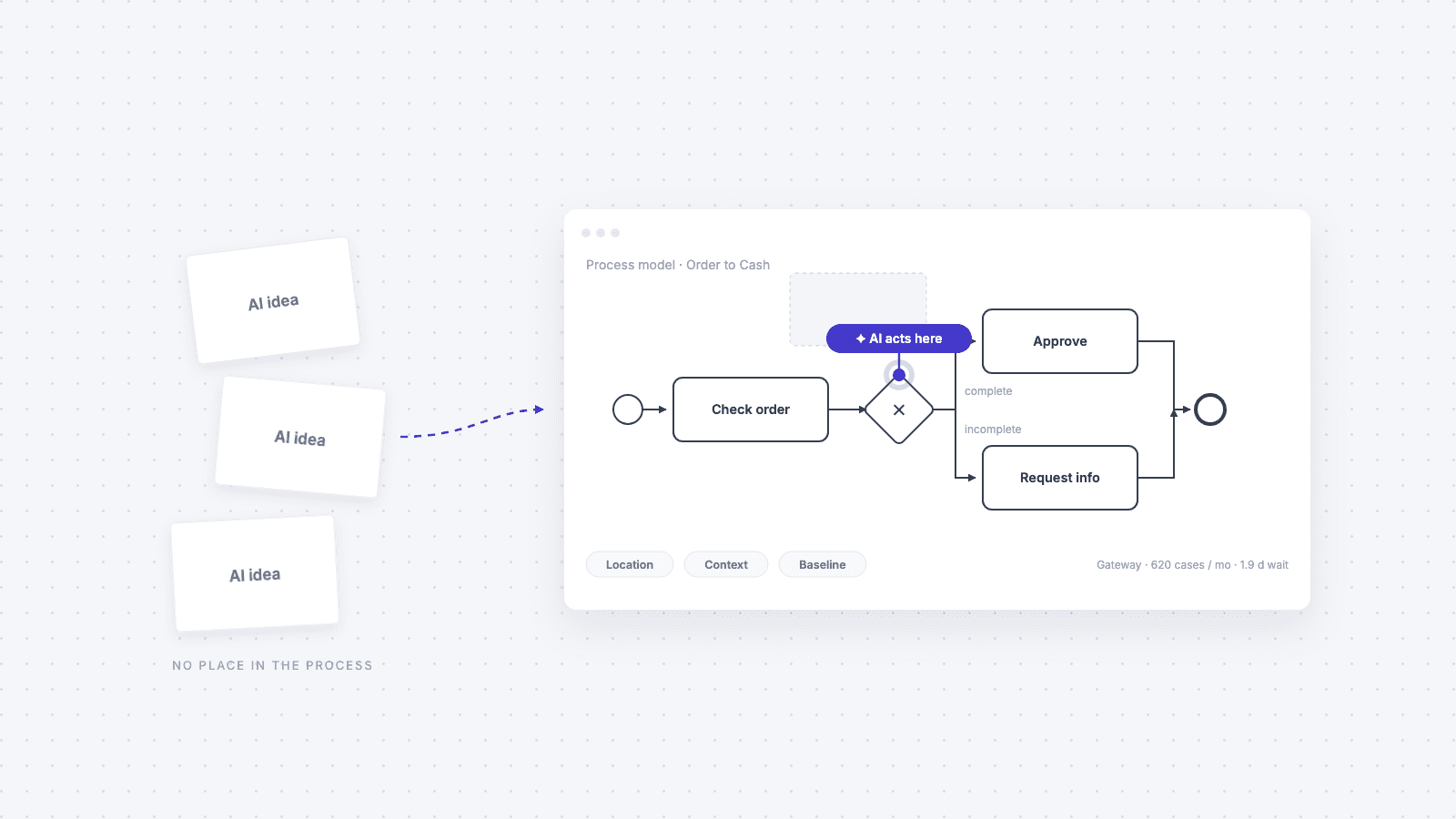
Your Process Model Is an AI Opportunity Map
Most AI programmes start with a brainstorm and end with a floating pilot. Read AI opportunities straight off your BPMN model instead: four constructs, three autonomy modes, twelve build-ready patterns.
Read →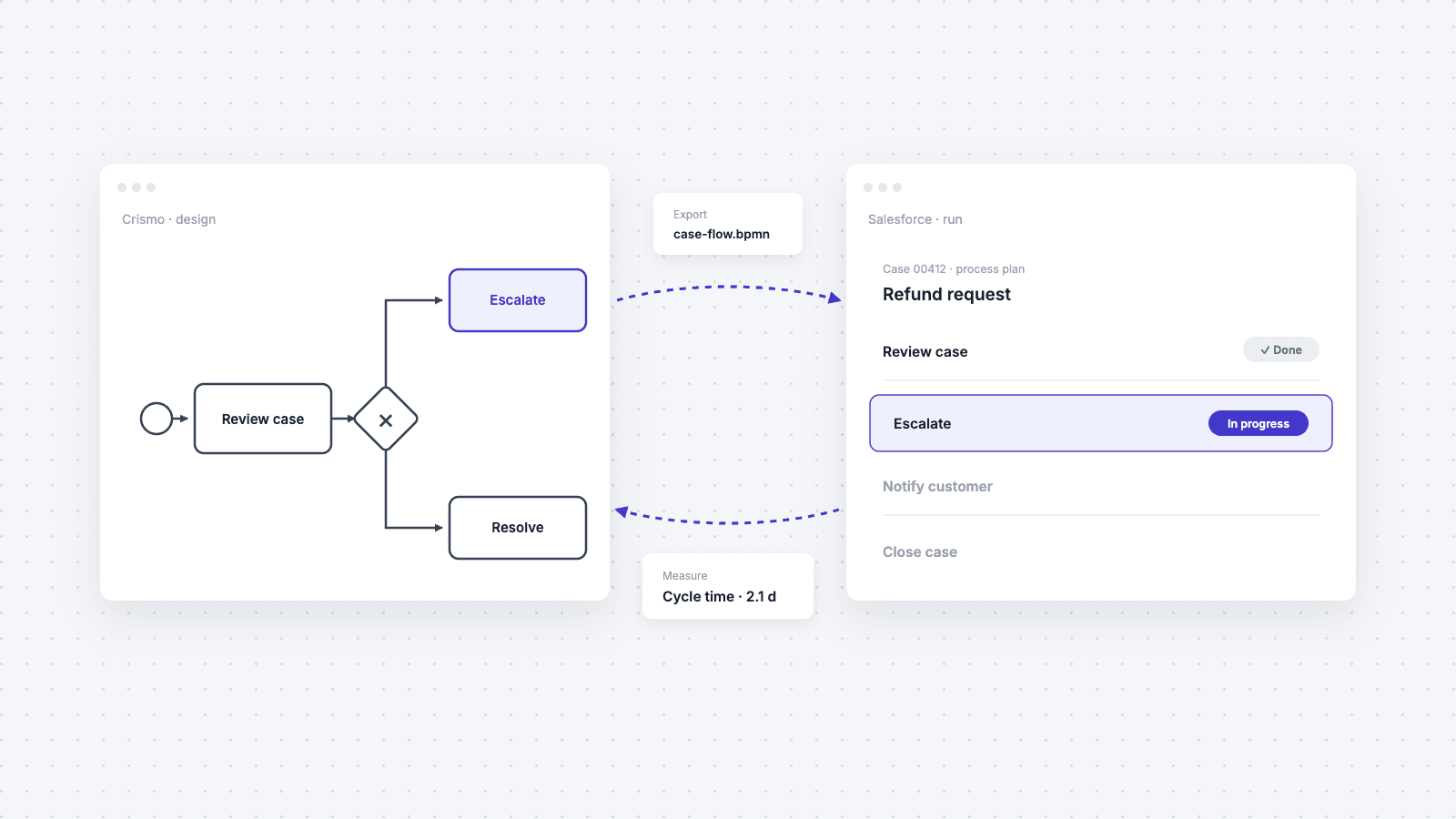
BPMN to Salesforce: design processes in Crismo, run them in Salesforce
A Salesforce consultant models in Crismo, exports the BPMN file, and imports it into Salesforce, where it runs as a process plan on a case. Here is how that closes the design, execute, measure loop.
Read →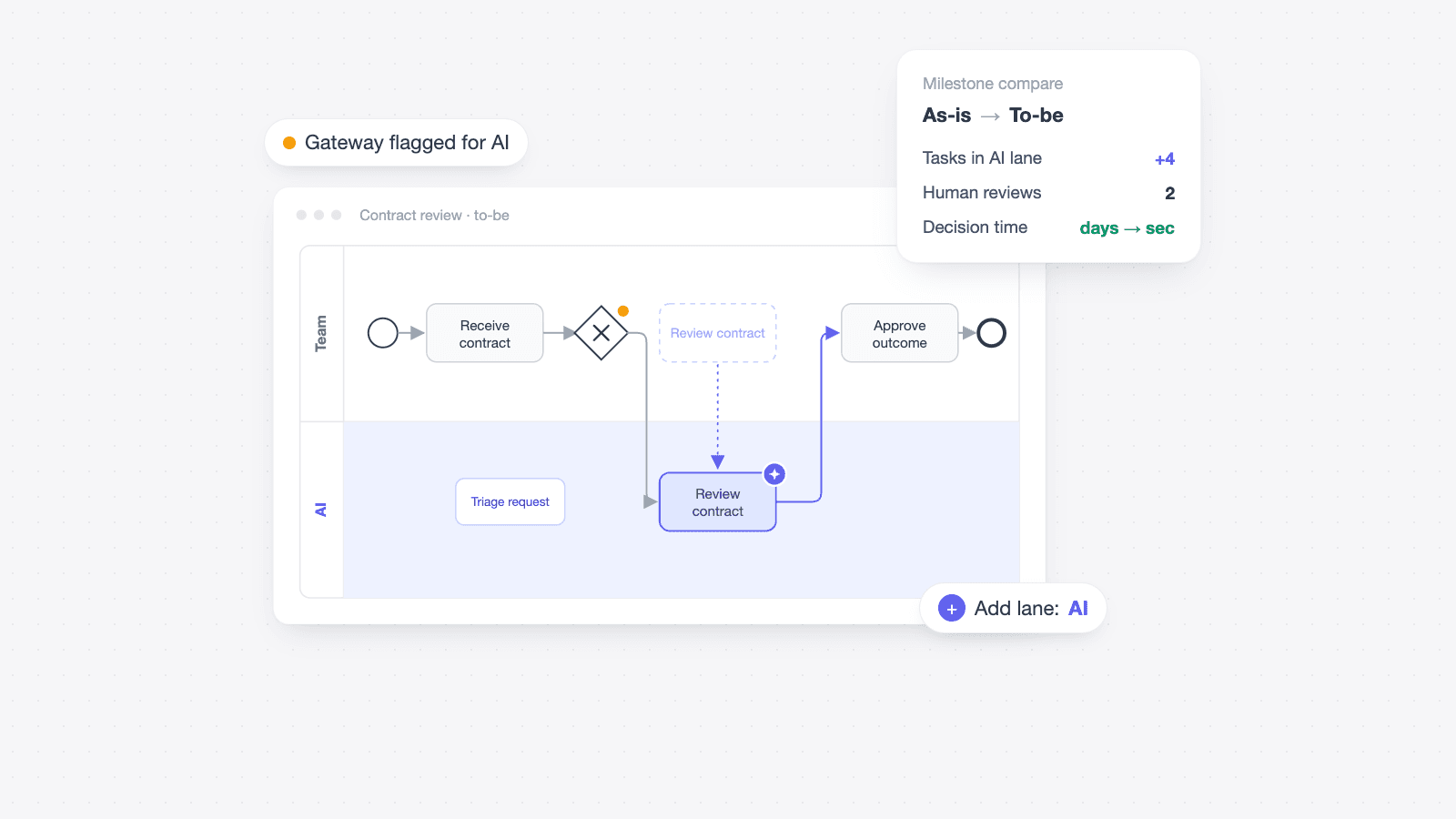
Don't Tweak the Process. Rethink It.
Most to-be processes are just the as-is with fewer boxes. AI removes the old constraint that shaped them. Give AI its own BPMN lane, work through your gateways and reasoning tasks, and design a to-be that looks different, not just shorter.
Read →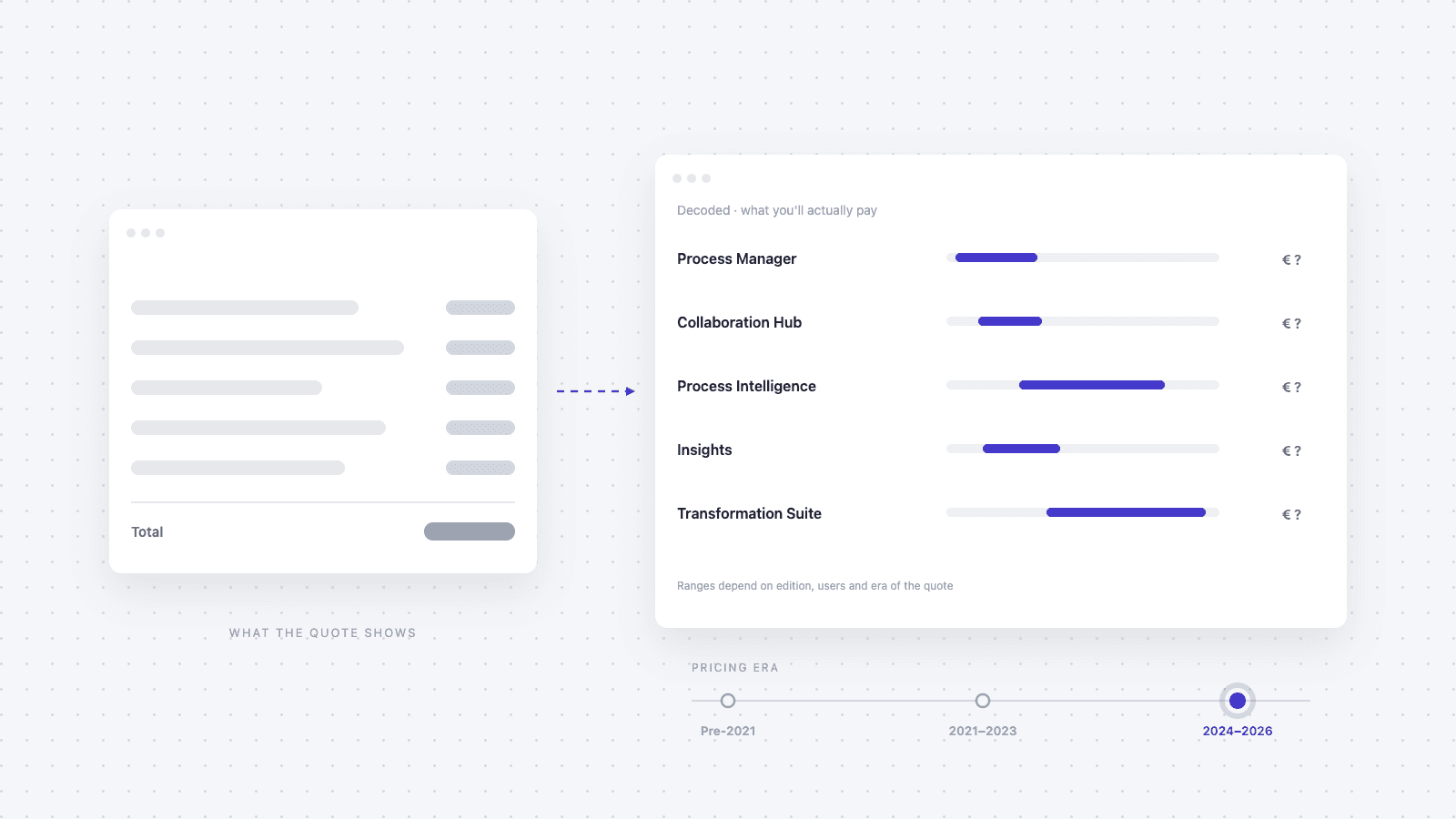
SAP Signavio Pricing Decoded: What You'll Actually Pay
SAP Signavio hides its prices — mid-market deals typically run €30K–150K/yr. Here's how the licensing actually works, what drives quote variance, and how to estimate your renewal before the call with your account team.
Read →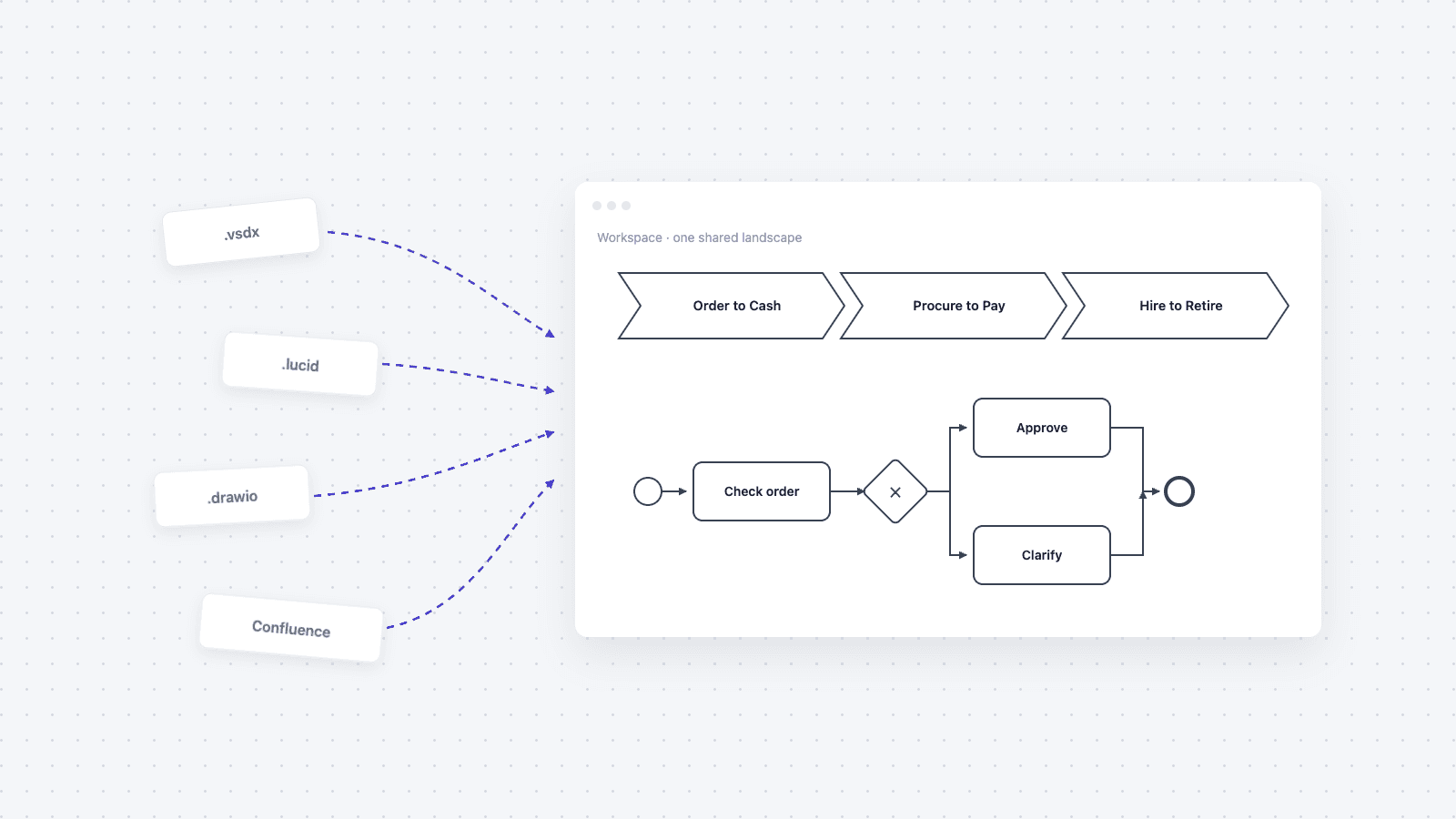
Process Mapping with Crismo: From Import to Shared Workflow
A walkthrough of process mapping in Crismo: import existing diagrams from Visio, Lucidchart, or draw.io; model in BPMN with workspace context; reuse definitions from a shared dictionary; and ship with collaborative review.
Read →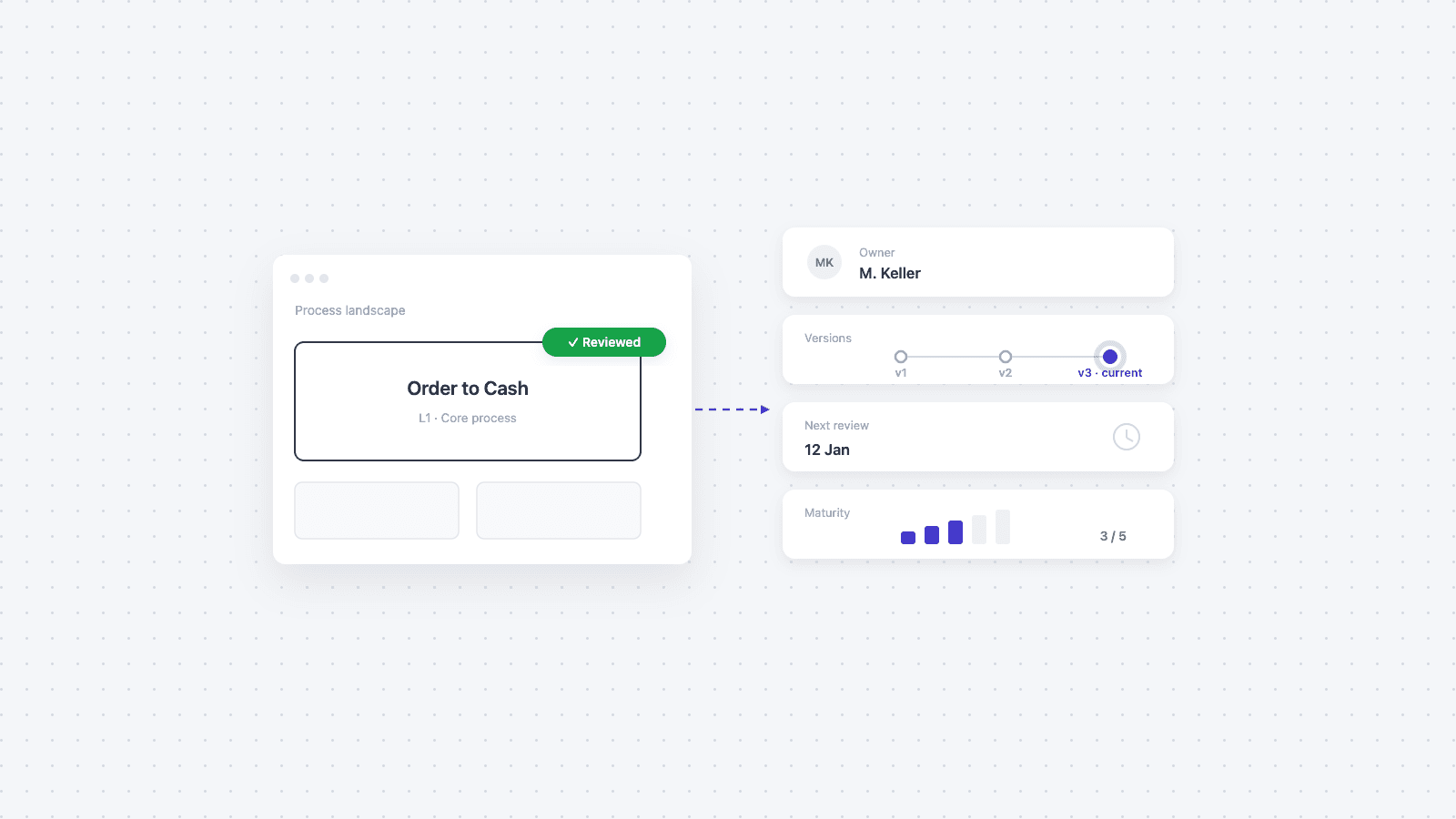
Process Governance in Crismo: Owners, Reviews, Versions
Process documentation goes stale without governance. This walkthrough shows how Crismo handles process ownership, version history, review tracking, and permissions so your process library stays accurate and accountable.
Read →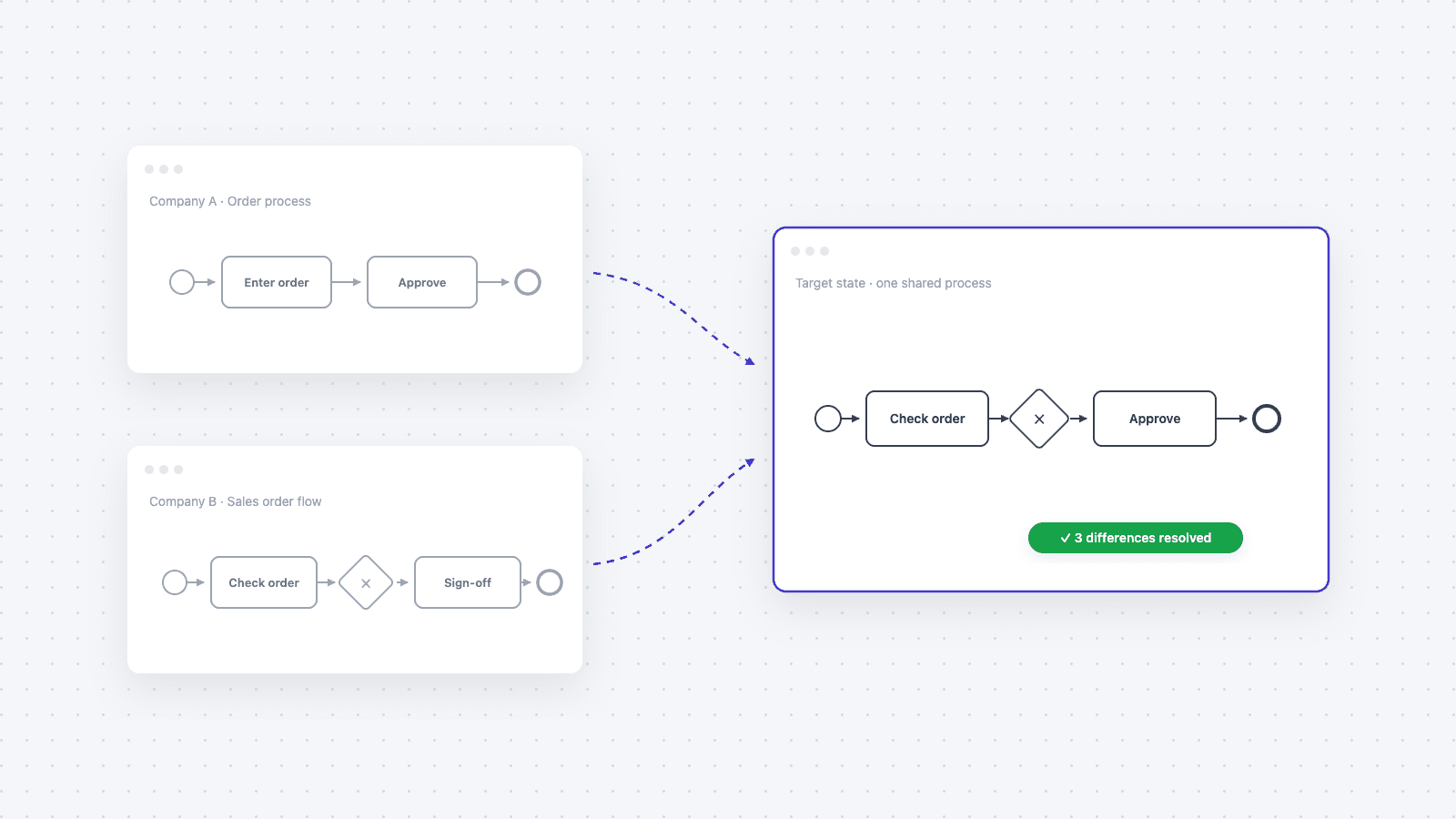
How Teams Use Crismo to Harmonize Processes Post-M&A
After a merger, two organizations bring two sets of processes. Crismo gives integration teams a shared workspace to import, compare, and consolidate process documentation from multiple sources into one coherent landscape.
Read →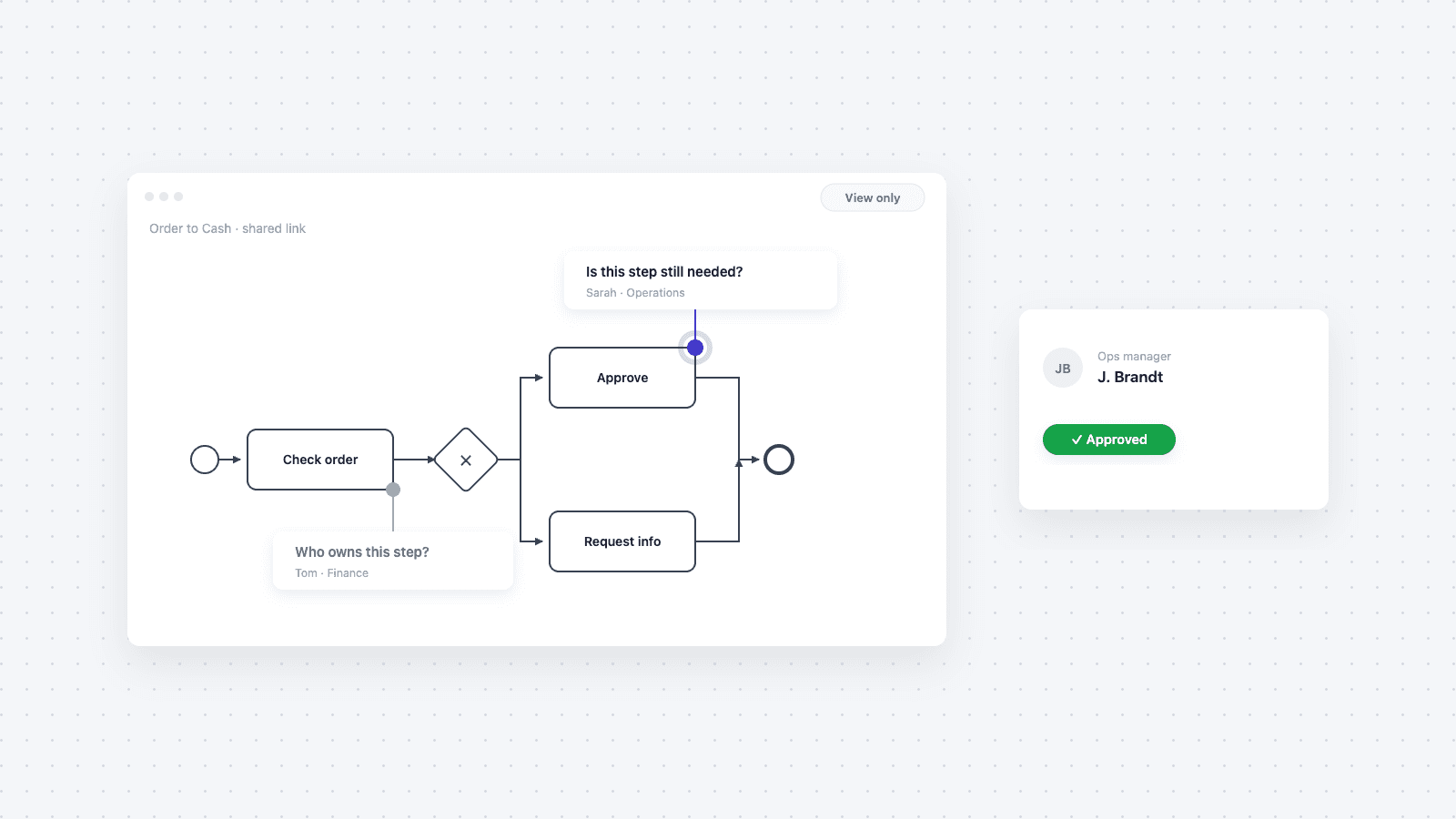
How to Share Process Models with Non-Technical Stakeholders
Process diagrams are only valuable when the people who need to act on them can actually understand them. Learn how Crismo's view-only sharing, comments, and embedded diagrams make process models accessible to every stakeholder, no BPMN expertise required.
Read →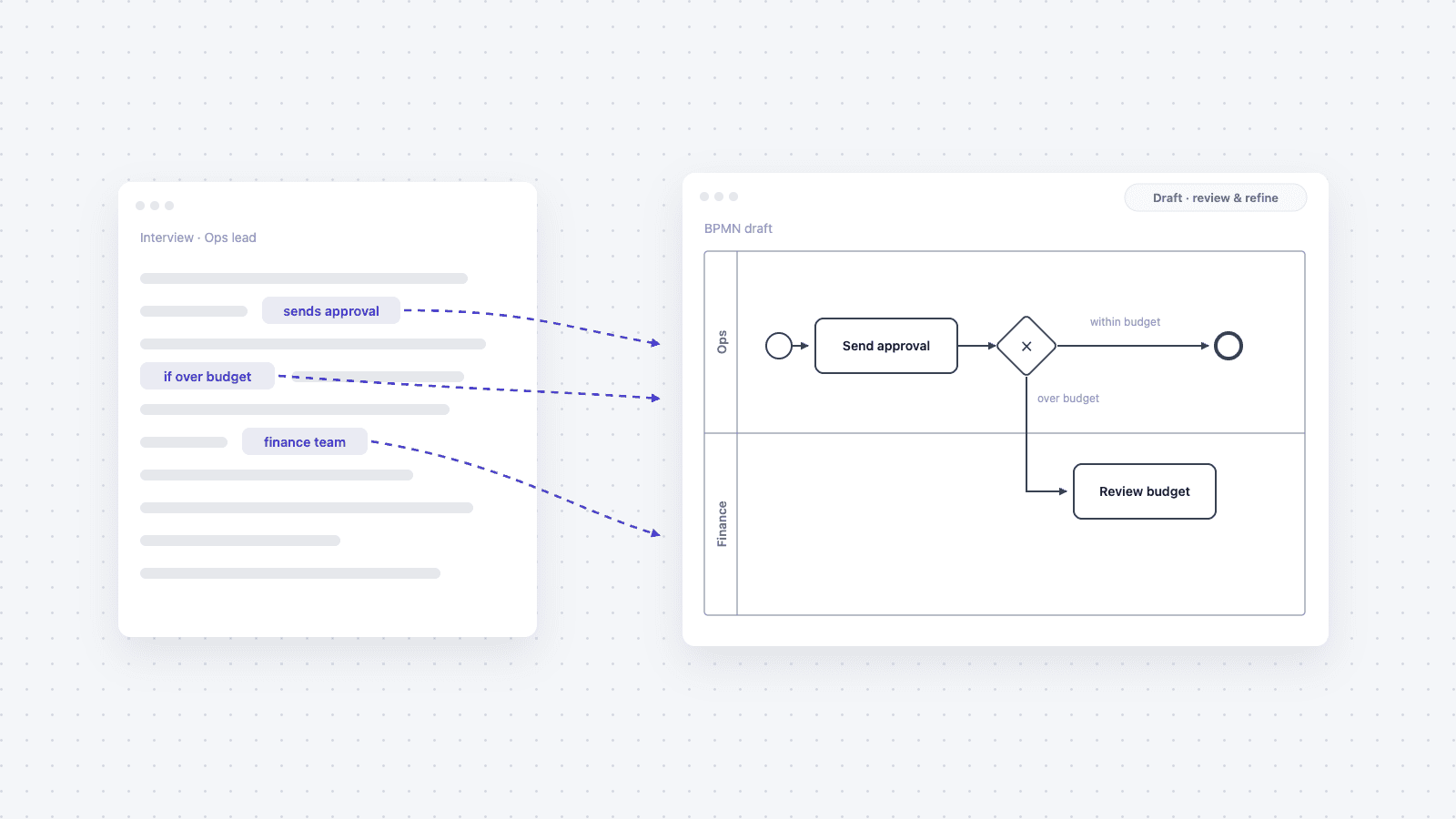
From Interview Notes to BPMN: The Crismo Discovery Workflow
Discovery workshops produce transcripts and sticky notes. Turning those into a real BPMN diagram usually takes days. With Crismo's AI discovery feature, you paste a transcript and get a structured process model in seconds.
Read →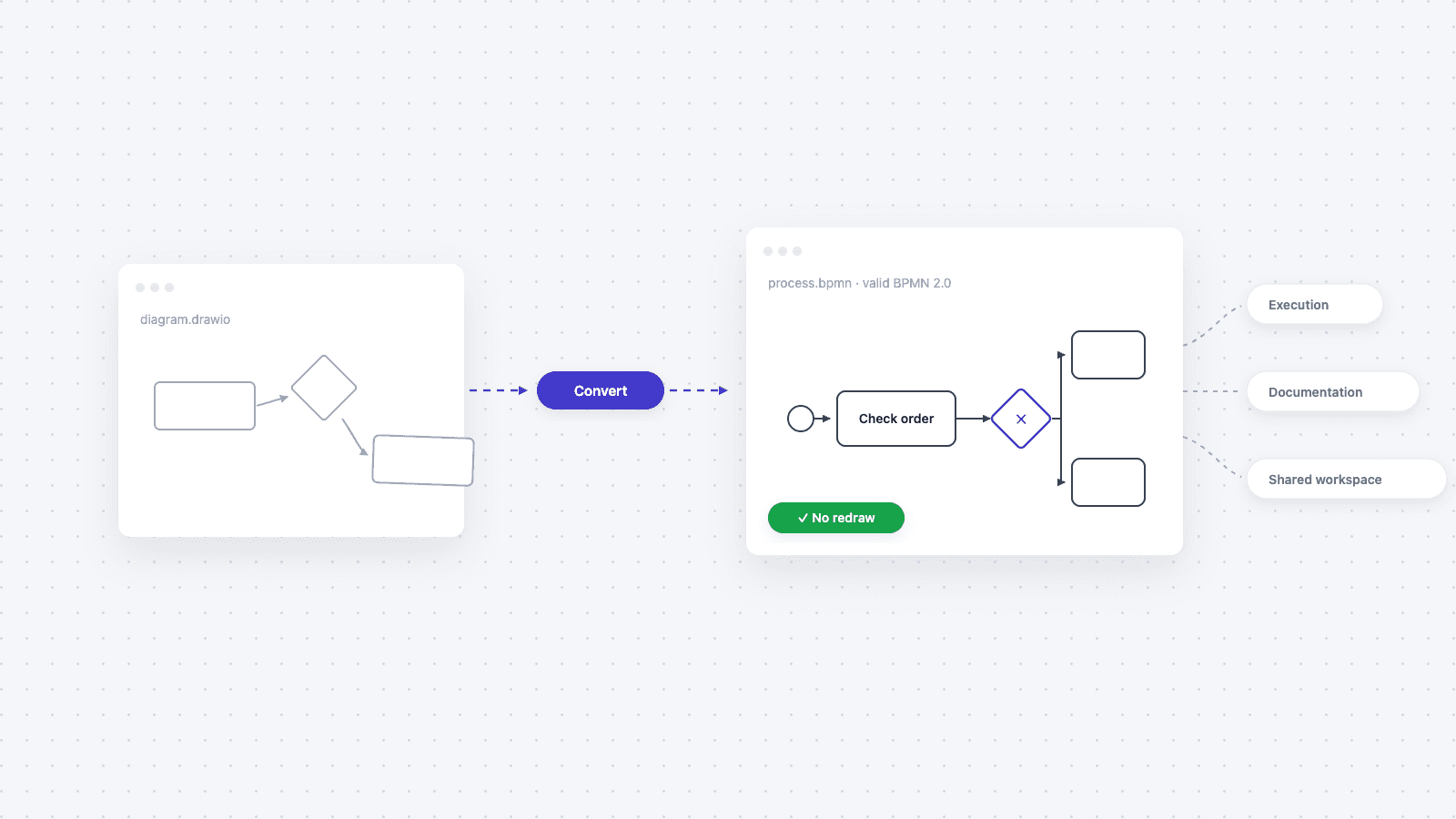
Convert draw.io Diagrams to Real BPMN Without Redrawing
Already using draw.io for BPMN? Here’s how to convert your existing diagrams into real BPMN XML, avoid redraw work, and move into a BPMN-native workflow.
Read →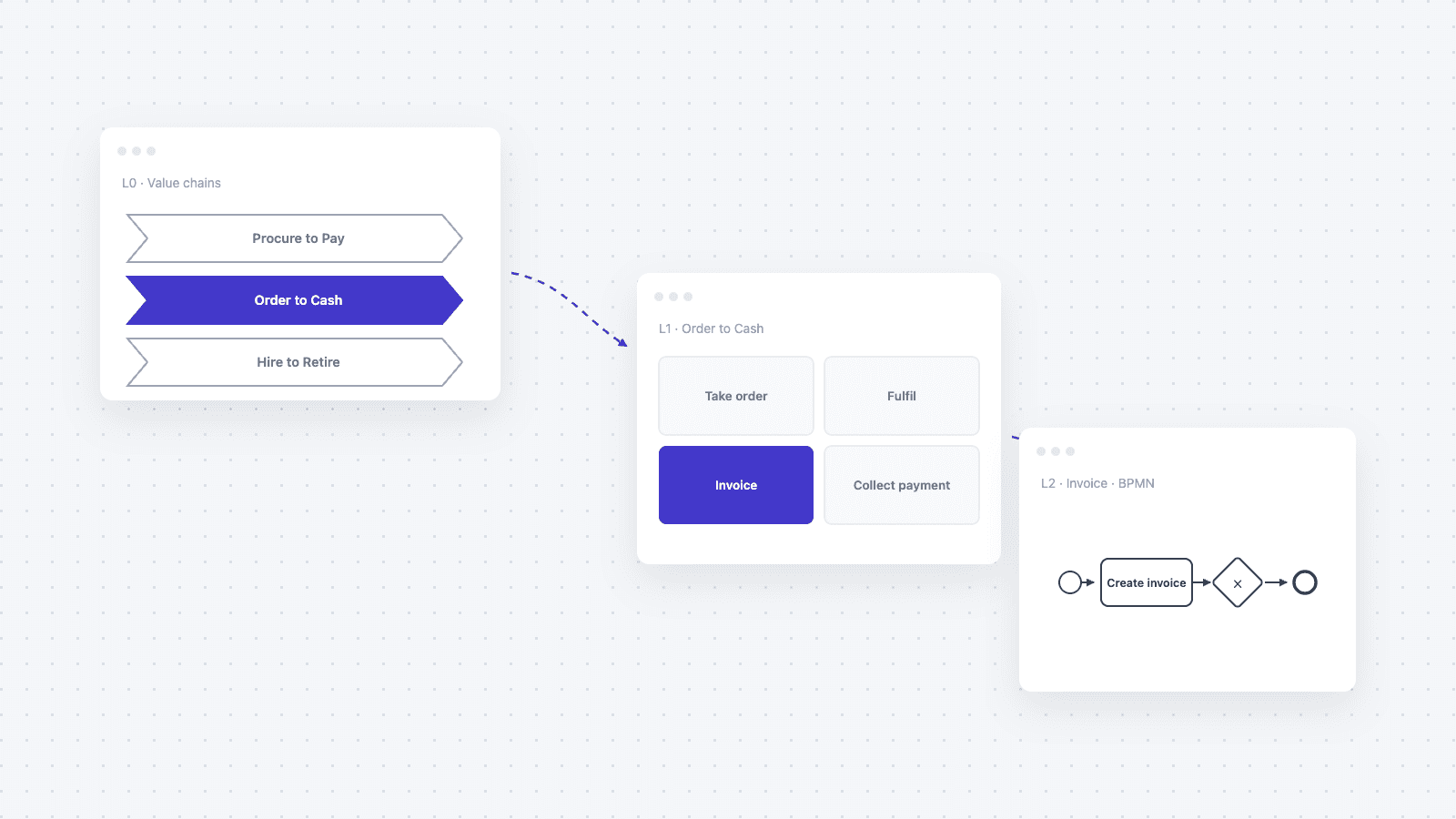
Build Your First Process Landscape in Crismo (L0 to L2)
A step-by-step walkthrough of building a process landscape in Crismo, from value chain (L0) through process groups (L1) to detailed BPMN diagrams (L2). Includes practical tips for structuring your first landscape.
Read →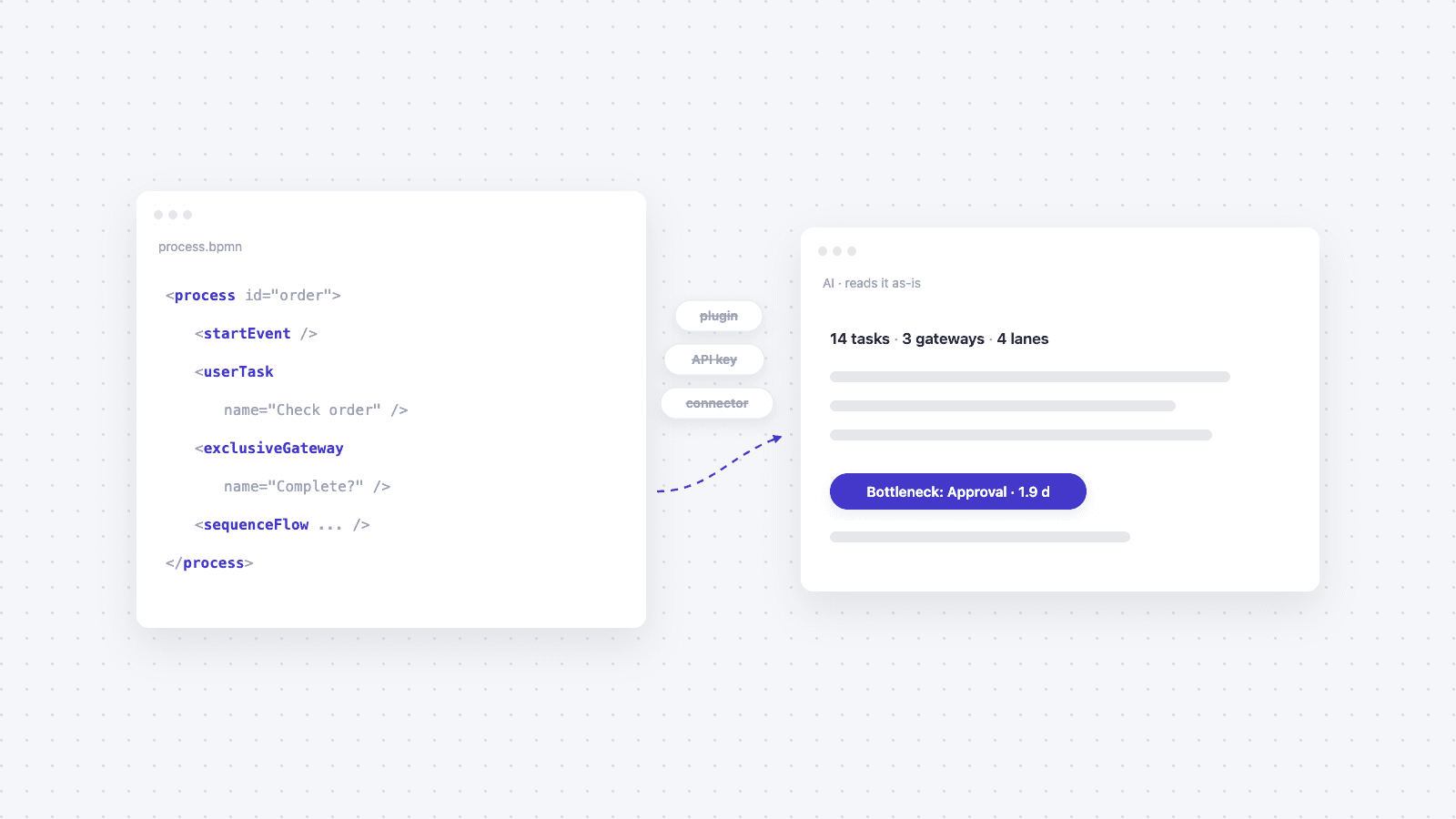
BPMN Is the AI Interface That Nobody Ever Had to Build
Every LLM already understands BPMN. The standard is in the training data. When you model in BPMN, your processes are natively readable by any AI model. No connector, no adapter, no translation layer. The format is the interface.
Read →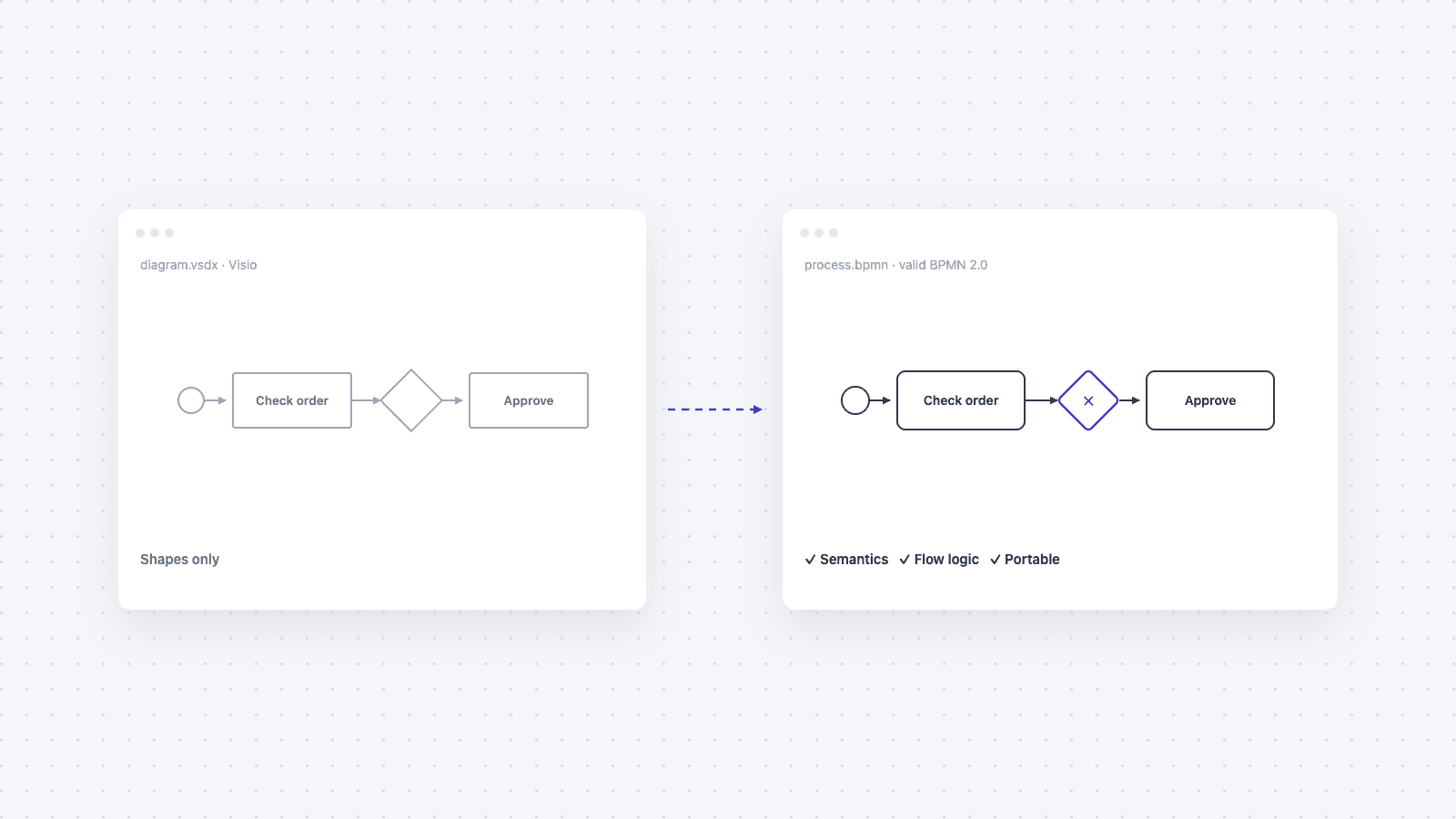
Your Visio Diagrams Aren't Real BPMN. Here's Why It Matters
Visio has a BPMN stencil. The shapes look right. But the file it produces is a proprietary drawing, not a standards-compliant process model. Here's what that means and how to fix it.
Read →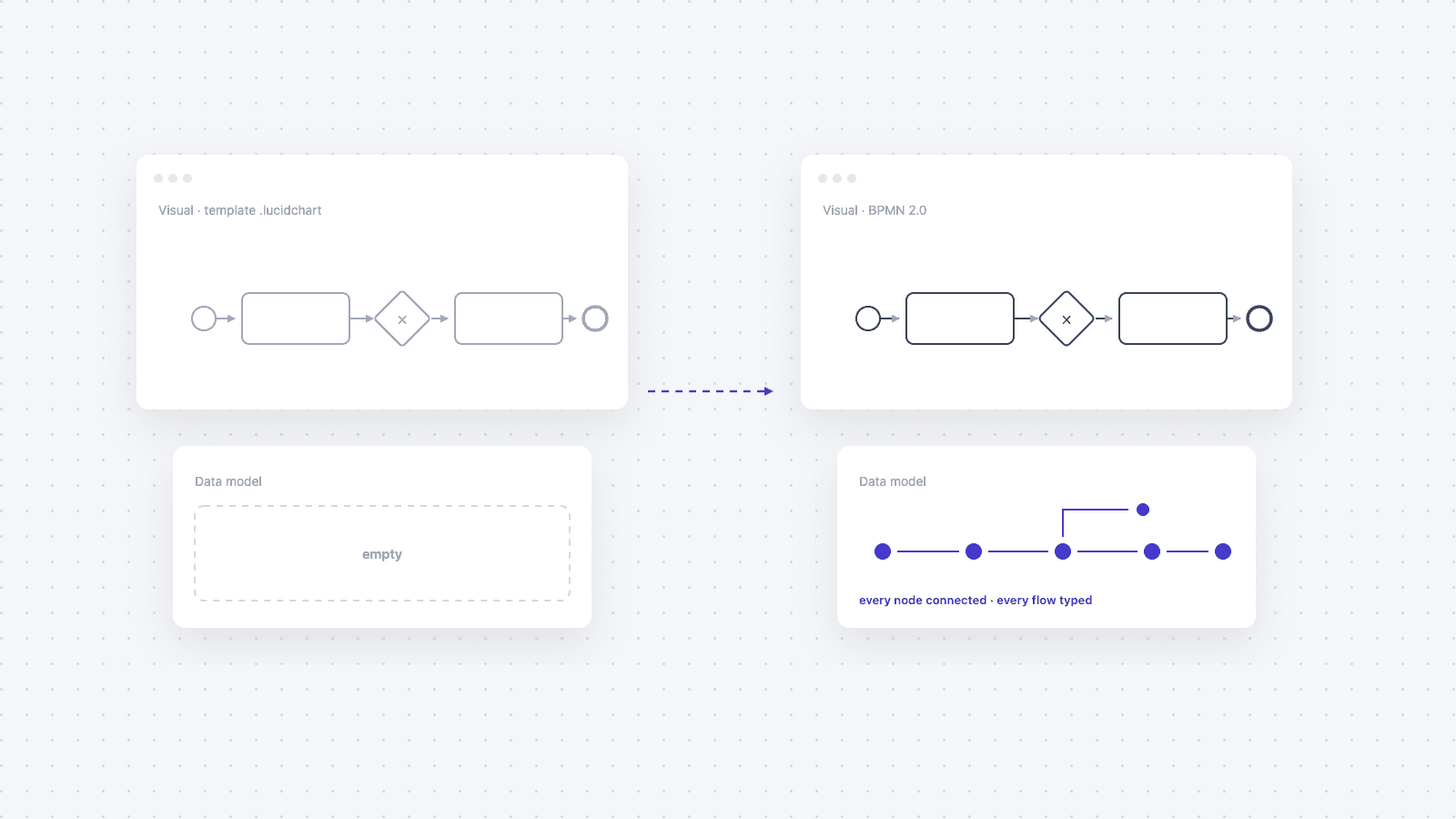
Lucidchart BPMN Templates Look Right. They Aren't Valid.
Lucidchart has a polished BPMN template. The shapes look correct. But what you export is a drawing that resembles BPMN, not a standards-compliant process model. Here's why that matters and how to fix it.
Read →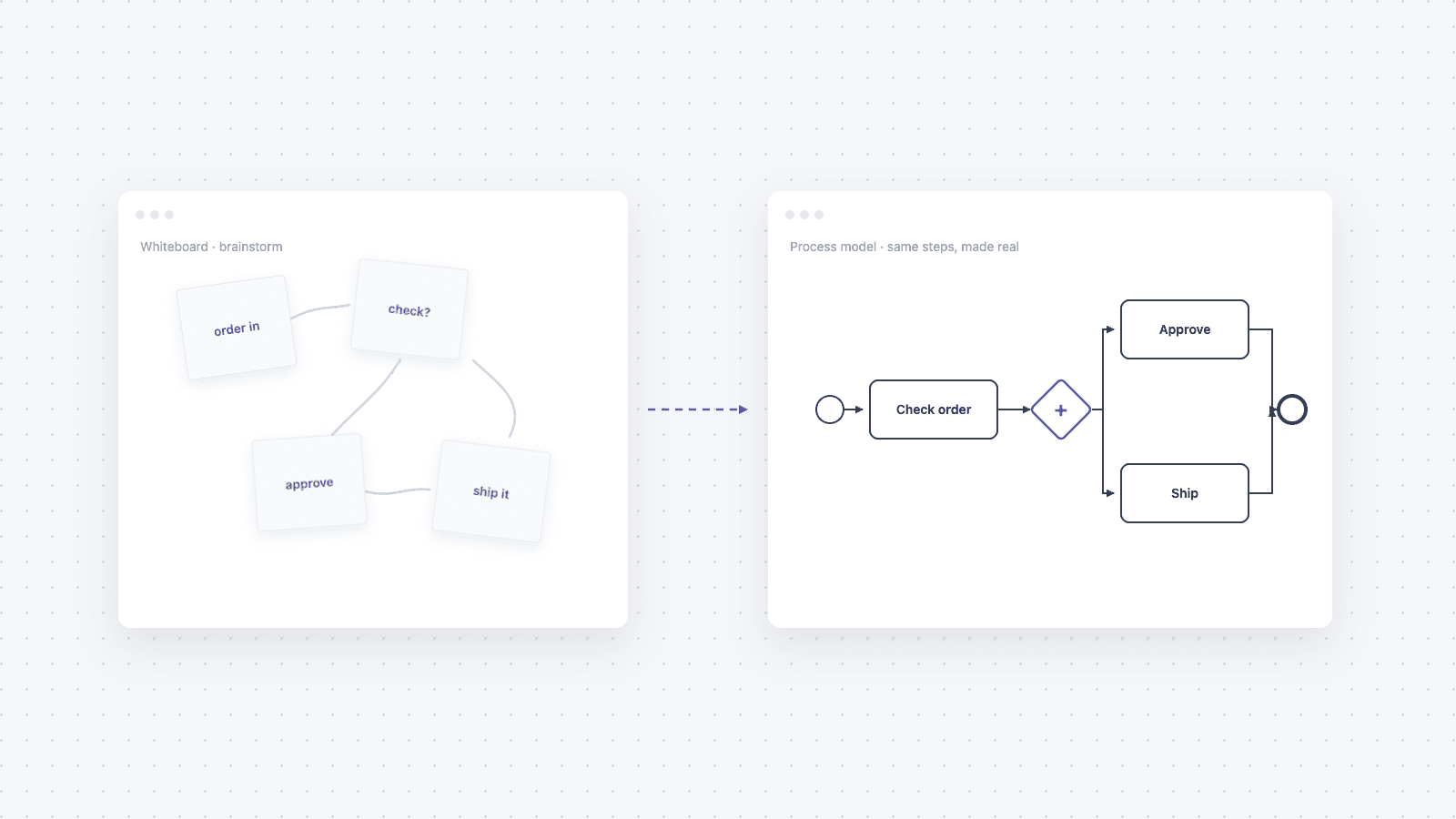
Miro Is Great for Brainstorming, Not Process Models
Miro is the best digital whiteboard for workshops and sticky notes. But the moment your brainstorm needs to become a real BPMN process model, you hit a wall. Here's how to bridge the gap.
Read →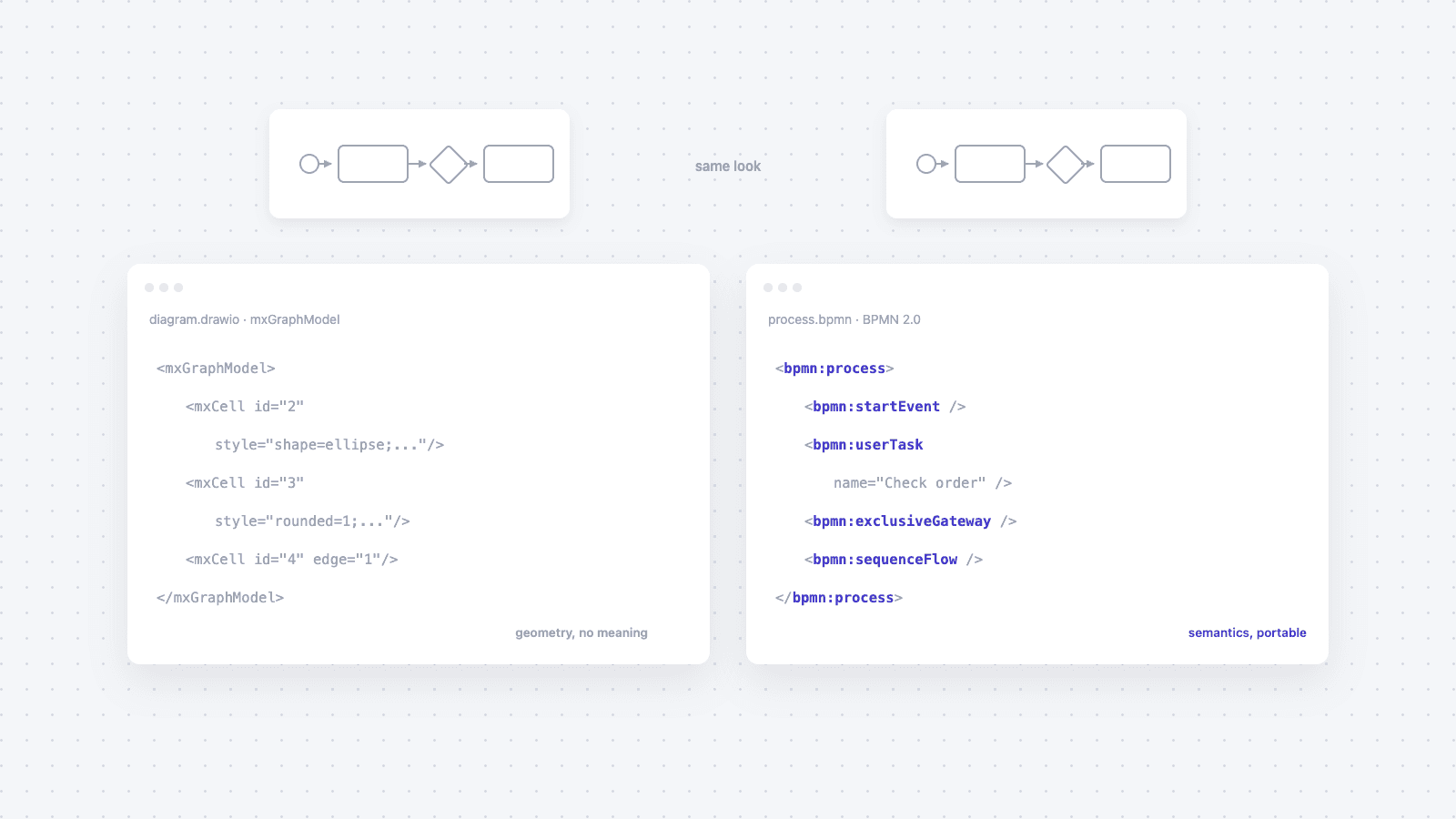
draw.io BPMN Export: What's Missing (and How to Fix It)
You drew a perfect BPMN diagram in draw.io. Then Camunda rejected the file. The problem isn't your diagram. It's that draw.io doesn't actually export BPMN. Here's what's really going on and how to fix it in under a minute.
Read →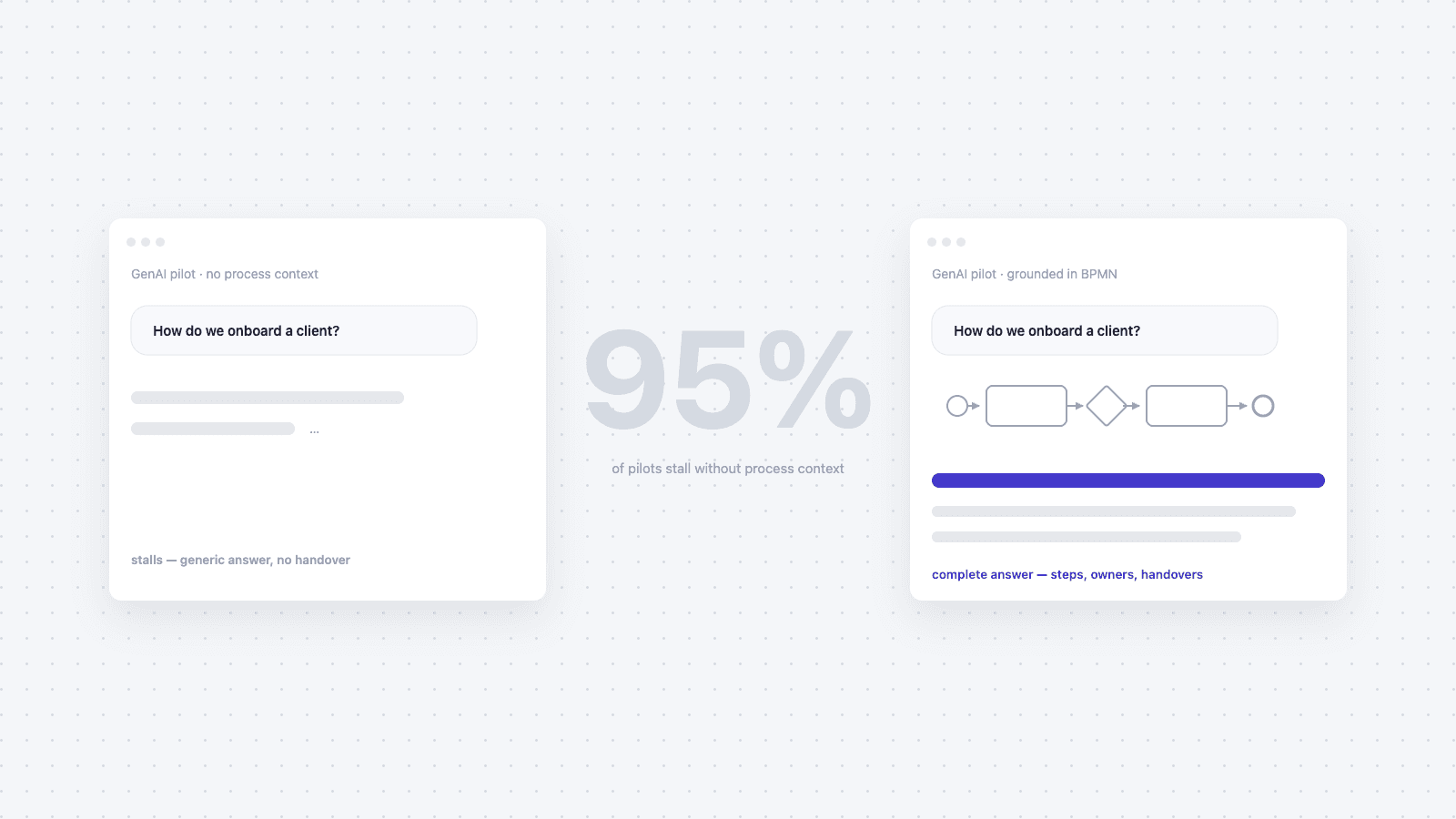
95% of GenAI Projects Fail — and How Process Fixes It
AI can generate answers — but without process, it can’t take action. This post explores why 95% of GenAI projects stall and how structured modeling with BPMN (and crismo) can flip the odds.
Read →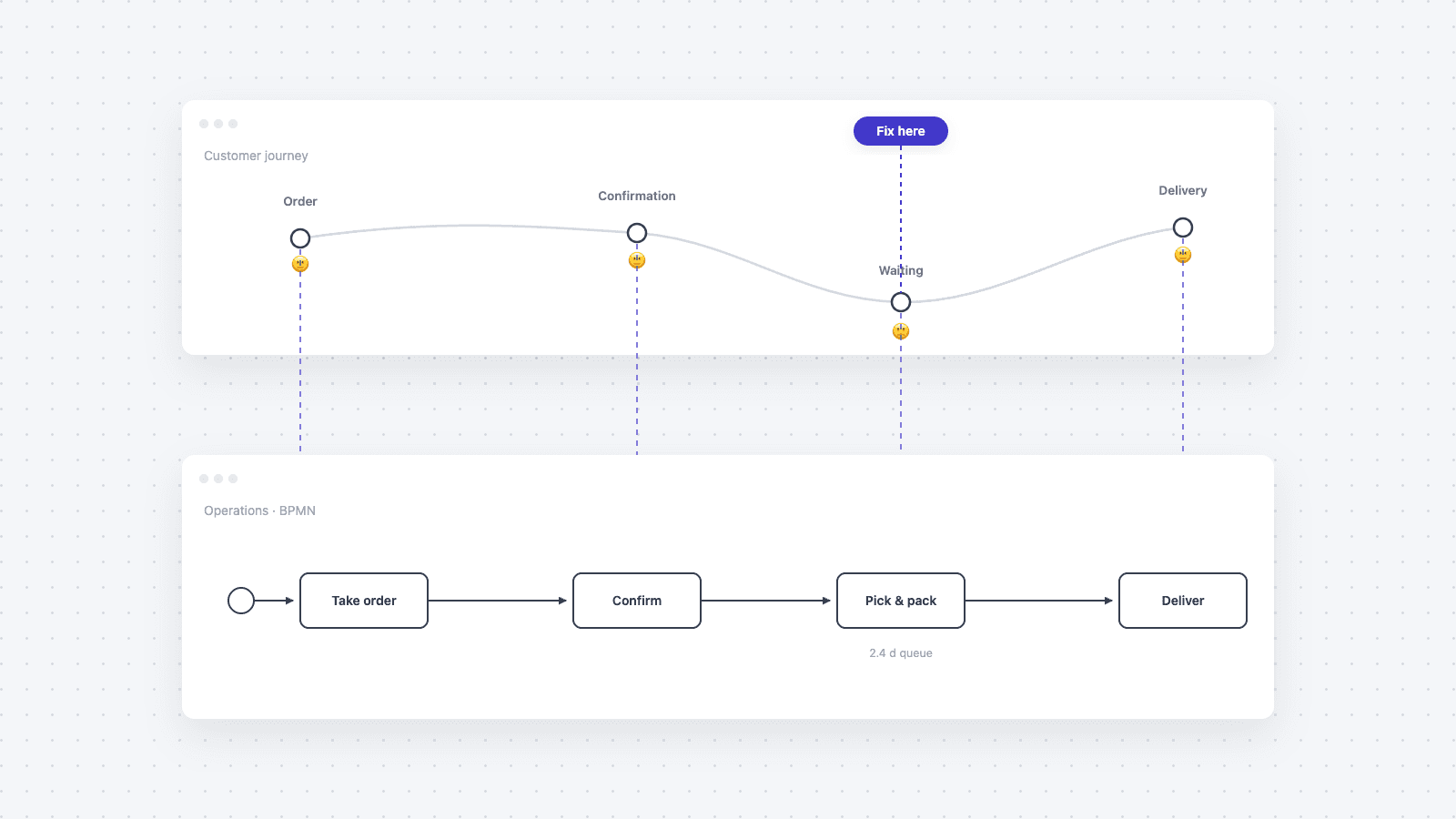
Where BPMN Meets Customer Journeys for Better Experiences
Most BPMN diagrams capture operations, while customer journeys reveal experiences. Kept apart, neither tells the full story. Learn how uniting BPMN with journey mapping creates processes that are efficient inside—and feel seamless outside.
Read →